


As we age, structural changes in our cartilage, reduced synovial fluid, and heightened systemic inflammation make joint health a critical priority for maintaining independence and quality of life. This comprehensive guide explores the physiological mechanics of joint aging, clarifies the crucial clinical differences between osteoarthritis and rheumatoid arthritis, and outlines actionable warning signs that indicate progressing joint degeneration.
This article was developed with expert guidance from Josephine Smith (BSc Health Science), Supplement Hub’s resident Nutritionist and In-House Practitioner. Specialising in healthy aging, longevity, and joint health, Josephine brings deep clinical insight into how targeted nutrition, gentle movement, and bioavailable supplementation can protect joint structures and ease daily stiffness as our bodies evolve over time.
Key Takeaways:
- Age-Related Decline Is Natural, But Manageable: While there is no cure for osteoarthritis and cartilage naturally thins over time, its progression can be significantly slowed by eliminating pro-inflammatory dietary triggers, staying hydrated, and engaging in low-impact, joint-stabilizing movement
- Understand Your Specific Joint Condition: Osteoarthritis stems from slow, mechanical wear and tear, whereas Rheumatoid Arthritis is a rapid, systemic autoimmune condition. Recognizing the difference and tracking warning signs like prolonged morning stiffness or loss of mobility, ensures you adopt the correct management strategy early.
- Older Adults Require Targeted Dosing and Bioavailable Formulas: Natural digestive absorption drops with age, meaning mature adults often require higher therapeutic dosages (such as increasing daily Omega-3s to 2,000–3,000 mg or Calcium to 1,200 mg) using bioavailable forms like phytosome curcumin, chelated minerals, and hydrolyzed collagen peptides.
Does arthritis naturally worsen with age?
Yes, arthritis generally worsens over time as a natural part of aging, but a gradual decline is not inevitable. While there is currently no cure for arthritis or osteoarthritis, the condition does not have to follow a strictly downhill trajectory. Age-related wear and tear on cartilage, combined with joint fluid reduction, can cause joint degeneration to progress gradually over the years. However, the speed and severity of this progression are heavily influenced by daily habits, lifestyle factors, and environmental triggers.
Key Triggers That Can Accelerate Joint Degeneration
While age sets the stage for joint changes, sudden flare-ups and accelerated cartilage breakdown are often sparked by specific internal and external triggers:
- Pro-Inflammatory Foods: Diets high in refined sugars, ultra-processed oils, refined carbohydrates, and excess alcohol can heighten systemic inflammation, exacerbating joint swelling and pain.
- Repetitive Impact & Stress: Unsupportive footwear, poor posture, or high-impact activities without proper joint alignment can place excess physical stress on compromised cartilage.
- Sedentary Lifestyle: Inactivity starves joint cartilage of essential nutrients, which are circulated primarily through movement, while weakening the surrounding muscles that stabilize the joint.
-
Weather & Atmospheric Shifts: Drops in barometric pressure and cold temperatures often cause joint tissues to expand, increasing nerve pressure and stiffness.
Proactive Strategies to Slow Progression and Manage Daily Comfort
While you cannot reverse structural joint aging, you can significantly slow its progression and make day-to-day movement far more manageable:
| Strategy | Primary Mechanism | Daily Action Step |
| Strengthen Stabilizing Muscles | Shifts mechanical workload away from worn joint cartilage onto supporting muscle fibers. | Engage in low-impact resistance training and swimming 3–4 times weekly. |
| Adopt an Anti-Inflammatory Diet | Reduces systemic inflammatory cytokines that degrade joint tissue. | Prioritize omega-3 rich fatty fish, leafy greens, berries, and olive oil while eliminating refined sugars. |
| Maintain Optimal Hydration | Joint cartilage is composed of up to 80% water; hydration maintains shock absorption. | Drink adequate water throughout the day to support synovial fluid viscosity. |
| Targeted Nutraceutical Support | Delivers bioavailable building blocks and botanical modulators directly to joint tissue. | Incorporate high-absorption Curcumin, Omega-3 Fatty Acids, and Glucosamine/Chondroitin into your routine. |
By addressing underlying inflammatory triggers and maintaining targeted structural support, older adults can protect remaining joint cartilage, reduce daily stiffness, and preserve functional mobility well into their mature years.
How ageing affects your joints
Even without a diagnosis of arthritis or osteoarthritis, the natural passage of time brings physiological changes to every joint in the human body. Joint aging is a universal process that alters the structural integrity of cartilage, reduces fluid lubrication, and decreases connective tissue flexibility. Because these age-related shifts affect everyone to some degree, proactive pain management, joint nourishment, and mobility strategies are valuable for all mature adults, not just those managing diagnosed joint conditions.
Several key biological changes occur within our joints as we move into our mature years:
- Cartilage Thinning & Dehydration: Healthy joint cartilage is composed of up to 80% water. As we age, cartilage tissue naturally loses its water-binding capacity and proteoglycan content, making it thinner, less elastic, and less capable of absorbing daily impact.
- Reduction in Synovial Fluid: Synovial fluid acts as the joint’s internal engine oil, lubricating movement and delivering nutrients directly to cartilage. With age, the body produces less synovial fluid, leading to increased internal friction and morning joint stiffness.
-
Stiffening of Tendons and Ligaments: The collagen fibers that form our tendons and ligaments naturally shorten, tighten, and lose flexibility, restricting the joint's overall range of motion and making sudden movements feel more jarring.
The Unique Impact on Menopausal and Post-Menopausal Women
While age-related joint changes affect both men and women, women experience a distinct acceleration in joint discomfort during the menopausal transition. This acceleration is driven primarily by the sharp decline in estrogen:
| Hormonal & Tissue Shift | Impact on Joint Health | Functional Consequence |
| Estrogen Depletion | Estrogen acts as a natural anti-inflammatory agent and protects cartilage matrix cells (chondrocytes). | Rapid decline in estrogen leads to increased systemic joint inflammation and faster cartilage breakdown. |
| Collagen Loss | Estrogen directly regulates collagen synthesis; post-menopausal women lose up to 30% of skin and connective tissue collagen in the first 5 years post-menopause. | Tendons and ligaments lose structural elasticity, reducing joint stability and increasing susceptibility to aches. |
| Increased Pain Sensitivity | Estrogen influences central pain processing pathways in the brain and nervous system. | Hormonal drops can lower the body's pain threshold, making minor joint changes feel noticeably more uncomfortable. |
Because age-related joint wear and hormonal shifts overlap, prioritizing targeted nutritional support, such as bioavailable Omega-3 fatty acids, collagen peptides, and anti-inflammatory botanicals like Curcumin, helps protect structural joint integrity and keeps you moving comfortably through every stage of life.
The difference between osteoarthritis and rheumatoid arthritis
While both osteoarthritis (OA) and rheumatoid arthritis (RA) cause joint pain, stiffness, and reduced mobility, they are fundamentally different conditions driven by entirely distinct underlying mechanisms. Understanding whether your joint discomfort stems from mechanical wear or an autoimmune response is essential for choosing the right nutritional, medical, and lifestyle management strategy.
Osteoarthritis is by far the most common form of arthritis, particularly among mature adults. Often described as the natural "wear and tear" of the joint, it occurs when the protective cartilage cushioning the ends of your bones gradually breaks down over decades of daily movement.
Rheumatoid Arthritis, by contrast, is an autoimmune and systemic inflammatory disease. Instead of mechanical wear, the body’s immune system mistakenly attacks its own joint lining (synovium), causing severe swelling, bone erosion, and joint deformity if left unmanaged.
Comparing Osteoarthritis vs. Rheumatoid Arthritis
| Feature | Osteoarthritis (OA) | Rheumatoid Arthritis (RA) |
| Primary Cause | Mechanical degeneration and gradual loss of protective joint cartilage over time. | Autoimmune response where the body attacks the joint lining (synovium). |
| Speed of Progression | Gradual & Slow: Progresses steadily over years or decades; strongly linked to aging and lifelong joint stress. | Rapid & Variable: Can develop quickly over weeks or months, often presenting with sudden systemic "flares." |
| Joint Involvement | Asymmetrical: Usually affects specific worn joints (e.g., one knee, one hip, or individual thumb joints). | Symmetrical: Typically affects matching joints on both sides of the body simultaneously (e.g., both wrists or both knees). |
| Morning Stiffness | Usually lasts less than 30 minutes and improves as the joint warms up and moves. | Often lasts longer than 60 minutes or several hours after waking up. |
| Systemic Symptoms | Confined strictly to the affected joints (no fatigue, fever, or organ involvement). | Causes systemic symptoms including chronic fatigue, mild fever, and widespread inflammation. |
| Prevalence with Age | Extremely common; risk increases significantly with age and joint load. | Less common; can develop at any age (typically onset between ages 30 and 60). |
Does One Progress Faster as You Age?
Yes, Rheumatoid Arthritis generally progresses significantly faster than Osteoarthritis, particularly during active inflammatory flares. Because RA is driven by an aggressive immune system attack rather than physical friction, untreated systemic inflammation can cause rapid joint damage, cartilage destruction, and bone erosion within a matter of months.
On the other hand, Osteoarthritis progresses much more slowly and predictably. While age accelerates cartilage thinning, OA degeneration unfolds gradually across decades. This slower trajectory gives mature adults a crucial window of opportunity: by incorporating targeted joint support, such as bioavailable Omega-3s, Glucosamine, and high-absorption Curcumin, alongside low-impact strength exercise, you can effectively cushion joint structures, soothe daily friction, and preserve functional mobility for years to come.
What are the signs that your arthritis is getting worse?
As we age, it is natural for joints to experience minor fluctuations in daily comfort. However, distinguishing between temporary joint stiffness and true disease progression is crucial for protecting your long-term mobility. Recognizing the early warning signs of advancing arthritis allows mature adults and caregivers to adjust targeted supplement protocols, refine physical activity routines, and consult healthcare professionals before irreversible cartilage damage occurs. If you or a loved one are managing osteoarthritis or chronic joint wear, monitor your symptoms closely for these key clinical indicators that your joint health may be deteriorating:
- Increasing Frequency and Intensity of Pain: Pain that previously occurred only after strenuous exertion now persists during light daily tasks, or lingers while resting, sitting, or attempting to sleep at night.
- Prolonged Morning Stiffness: While brief stiffness upon waking (under 30 minutes) is common with mild osteoarthritis, morning joint gelation that takes longer to work off, or returns after short periods of sitting ("chair lock"), indicates heightened joint inflammation.
- Progressive Loss of Range of Motion: Difficulty fully extending a knee, reaching overhead to retrieve items, bending to tie shoes, or gripping objects tightly signals accelerating cartilage loss and joint space narrowing.
- New or Worsening Joint Crepitus: A noticeable crunching, cracking, or grinding sensation (crepitus) during movement, caused by bone surfaces rubbing together as protective cartilage wears thin.
- Increased Swelling, Warmth, or Tenderness: Persistent fluid buildup (joint effusion) or localized heat around the joint suggests active inflammation of the synovial membrane.
- Joint Instability or "Buckling": A feeling that a knee, hip, or ankle is giving way or locking up during weight-bearing movement. This occurs as compromised cartilage destabilizes joint mechanics and surrounding muscle strength declines.
- Development of Joint Deformity or Nodules: The emergence of bony enlargement, such as Heberden’s or Bouchard’s nodes on the finger joints, or a visible shifting in joint alignment (e.g., bow-leggedness or knock-knees).
Can you slow down or stop arthritis from getting worse?
Identifying these signs early provides a vital window for proactive intervention. Rather than accepting joint decline as an inevitable consequence of aging, taking targeted action can help stabilize the joint environment:
- Optimize Anti-Inflammatory Nutrition: Increase intake of therapeutic Omega-3 EPA/DHA fatty acids and bioavailable Curcumin to calm active synovial inflammation.
- Protect Joint Microstructure: Introduce targeted structural building blocks like Glucosamine, Chondroitin, and Type II Collagen to nourish remaining cartilage matrices.
- Engage in Low-Impact Strengthening: Work with a physical therapist to strengthen the stabilizing muscles (such as the quadriceps for knee joints) to offload physical mechanical pressure from worn cartilage.
The best exercises to help manage arthritis
Expert Insight from expert, Josephine Smith:
"When managing joint wear and tear, movement is truly medicine. Joint cartilage lacks its own blood supply, it relies entirely on the 'sponge effect' of gentle movement to pump nutrient-rich synovial fluid into the joint space. The goal is never high-impact strain, but rather keeping joints supple, preserving range of motion, and building the stabilizing muscles that act as internal shock absorbers."
Targeted Exercises by Joint Area
To protect aging joints while keeping them functional, Josephine recommends focusing on low-impact, fluid movements tailored to specific trouble spots:
Hands and Wrists
Targeting finger stiffness, thumb base discomfort, and reduced grip strength:
Finger Tendon Glides: Open your hand flat, then curl your fingers into a hook fist, a full fist, and a flat tabletop shape. Repeat 5–10 times on each hand to maintain finger flexibility.
Wrist Circles & Flexes: Extend your arms with soft elbows. Slowly make gentle wrist circles clockwise and counterclockwise, followed by flexing palms up and down to release forearm tension.
Stress-Ball / Sponge Squeezes: Gently squeeze a soft foam ball or damp sponge, holding for 3–5 seconds before releasing. This builds hand strength without stressing small finger joints.
Knees and Hips
Relieving weight-bearing friction, improving stride confidence, and supporting pelvic alignment:
Seated Leg Extensions (Quad Strengtheners): Sit tall in a sturdy chair. Slowly straighten one leg until horizontal, hold for 3 seconds to engage the thigh muscle (quadriceps), and lower smoothly. Repeat 8–10 times per leg to support knee alignment.
Standing Hip Abductions: Hold onto the back of a stable chair. Keeping your torso upright, slowly lift one leg out to the side 45 degrees, pause, and return. This strengthens the gluteus medius to stabilize hips during walking.
Stationary Cycling or Aquatic Walking: Pedaling on a recumbent bike or walking in waist-deep water provides smooth 360-degree joint movement with zero harsh impact on hip and knee cartilage.
Shoulders and Upper Spine
Opening the chest, releasing neck tension, and preserving overhead reach:
Shoulder Blade Squeezes (Rhomboid Retraction): Sit upright with arms relaxed at your sides. Gently pull your shoulder blades back and down toward each other, as if squeezing a pencil between them. Hold for 5 seconds and release.
Pendulum Swings: Lean forward slightly while resting one hand on a table. Let the other arm hang freely and gently swing it in small circles, letting momentum move the joint effortlessly without muscle strain.
Wall Crawls: Stand facing a wall at arm’s length. Slowly "walk" your fingertips up the wall as high as comfortable, hold for a breath, and walk back down.
Light Seated Exercises for Limited Mobility
If standing balance is compromised, mobility is restricted, or you are experiencing a painful flare-up, you can still nourish your joints from the safety of a chair. Josephine recommends these ultra-gentle, accessible movements:
Seated Ankle Pumps & Circles: While seated, lift your feet slightly and point your toes up and down, then rotate ankles in slow circles. This improves lower leg circulation and eases morning ankle stiffness.
Gentle Seated Torso Twists: Sit upright with hands resting on your thighs. Slowly rotate your upper body toward the right, placing your hand on the outside of your knee for light support. Hold for 2 breaths, return to center, and repeat to the left.
Seated Arm Marches: Rest your feet flat on the floor and gently swing your arms forward and back in a rhythmic marching motion. This light movement stimulates cardiovascular blood flow and warms up the shoulder complex without placing weight on lower limbs.
Can diet help with arthritis as we age?
While diet alone cannot reverse age-related cartilage loss or cure structural joint degeneration, what you put on your plate plays a direct role in managing joint comfort and day-to-day mobility. Systemic inflammation acts like a hidden amplifier for arthritis pain: high levels of circulating inflammatory compounds make sensitive joint linings more reactive, increase swelling, and accelerate cartilage degradation. By shifting toward an anti-inflammatory eating pattern, mature adults can help quiet this internal fire, cushion joint structures, and ease daily stiffness.
Key Anti-Inflammatory Foods for Aging Joints
To support healthy joint mechanics and soothe chronic discomfort, Josephine recommends prioritizing these nutrient-dense, evidence-based foods in your daily meals:
- Omega-3 Rich Fatty Fish: Wild salmon, mackerel, sardines, and anchovies are loaded with long-chain omega-3 fatty acids (EPA and DHA). EPA and DHA actively convert into resolvins, specialized lipid compounds that help actively turn off inflammatory pathways in joint tissue.
- Vibrant Berries & Dark Leafy Greens: Blueberries, blackberries, cherries, spinach, and kale are rich in polyphenols and anthocyanins. These potent antioxidants neutralize free radicals before they can damage chondrocytes (cartilage cells) and support healthy capillary circulation to surrounding connective tissues.
- Extra Virgin Olive Oil: Cold-pressed extra virgin olive oil contains oleocanthal, a naturally occurring phenolic compound that mimics the anti-inflammatory action of low-dose non-steroidal anti-inflammatory agents by inhibiting COX-1 and COX-2 enzymes.
- Golden Turmeric & Fresh Ginger: Both botanicals contain active polyphenols (curcuminoids and gingerols) that modulate NF-kB, the body's central genetic switchboard for systemic inflammation. Incorporating them into warm teas, soups, or stews provides gentle daily joint support.
- Fermented Foods & High-Fiber Prebiotics: Yogurt, kefir, sauerkraut, flaxseeds, and garlic nourish the gut microbiome. A healthy intestinal barrier reduces circulating endotoxins, which directly lowers systemic joint inflammation.
 |
Life & Soul High Strength Omega-3 Fish Oil - 60 Capsules | Bare Biology Life and Soul Daily Capsules deliver 1,700mg of pure omega‑3 from sustainably sourced wild fish to support a sharper mind, stronger heart, and clearer vision at every life stage.  |
How arthritis treatments can slow progression
While conventional medicine often focuses on managing symptoms as they arise, a comprehensive approach to joint health combines lifestyle adjustments with targeted nutritional therapeutics. Modern clinical research shows that providing the body with specific bioavailable building blocks and botanical anti-inflammatory agents can help calm the joint environment, protect remaining cartilage matrices, and ease daily friction.
By incorporating practitioner-grade supplements alongside low-impact movement and an anti-inflammatory diet, mature adults can actively support structural joint resilience and slow the rate of age-related degeneration.
Practitioner Perspective with Josephine Smith
"When selecting supplements for mature adults, absorption and quality are everything. As we age, stomach acid levels and digestive enzyme production naturally decline, making it harder to break down low-grade tablet forms. To truly support joint longevity and slow progression, we want to focus on high-potency, bioavailable ingredients that target both structural cartilage support and active inflammatory pathways."
Key Ingredients to Look For in Joint Supplements
When exploring our curated Arthritis & Joint Support Supplements Collection, Josephine recommends seeking out these clinically studied, high-absorption ingredients:
- Bioavailable Curcumin (Turmeric Extract): Standardized curcumin extracts modulate key inflammatory pathways (such as NF-kB and COX-2) to reduce joint swelling and morning stiffness. Look for phytosome or liposomal delivery forms (like Theracurmin® or Meriva®), which overcome raw turmeric's poor natural bioavailability and ensure therapeutic uptake into joint tissue.
- High-Concentration Omega-3 EPA & DHA: Concentrated fish oil or algae-derived omega-3 fatty acids provide EPA and DHA, which convert into specialized pro-resolving mediators (SPMs). These active compounds help "turn off" chronic synovial inflammation and reduce reliance on harsh daily pain medications.
- Glucosamine Sulfate & Chondroitin Sulfate: Essential structural components of cartilage tissue. Glucosamine provides the building blocks for glycosaminoglycans, while chondroitin helps retain water within the cartilage matrix to preserve shock-absorbing cushioning.
- Hydrolyzed Type II Collagen Peptides: Type II collagen is the primary structural protein found in joint cartilage. Bioavailable hydrolyzed peptides stimulate chondrocytes (cartilage cells) to produce new extracellular matrix components and support joint flexibility.
- Boswellia Serrata (Indian Frankincense): A botanical extract rich in boswellic acids (such as AKBA) that specifically inhibits the 5-LOX enzyme pathway, offering rapid relief from joint discomfort and supporting smooth range of motion.
- Gentle Mineral Malates (Magnesium & Calcium): Minerals bound to malic acid (such as calcium malate and magnesium malate) offer superior solubility and digestive comfort, ensuring surrounding bone structures and muscles remain strong without causing GI distress.
Visit our full Arthritis & Joint Health Collection to explore our complete range of practitioner-grade formulas, including gentle low-calcium options, high-potency Omega-3s, and bioavailable botanical extracts designed to keep you moving comfortably.
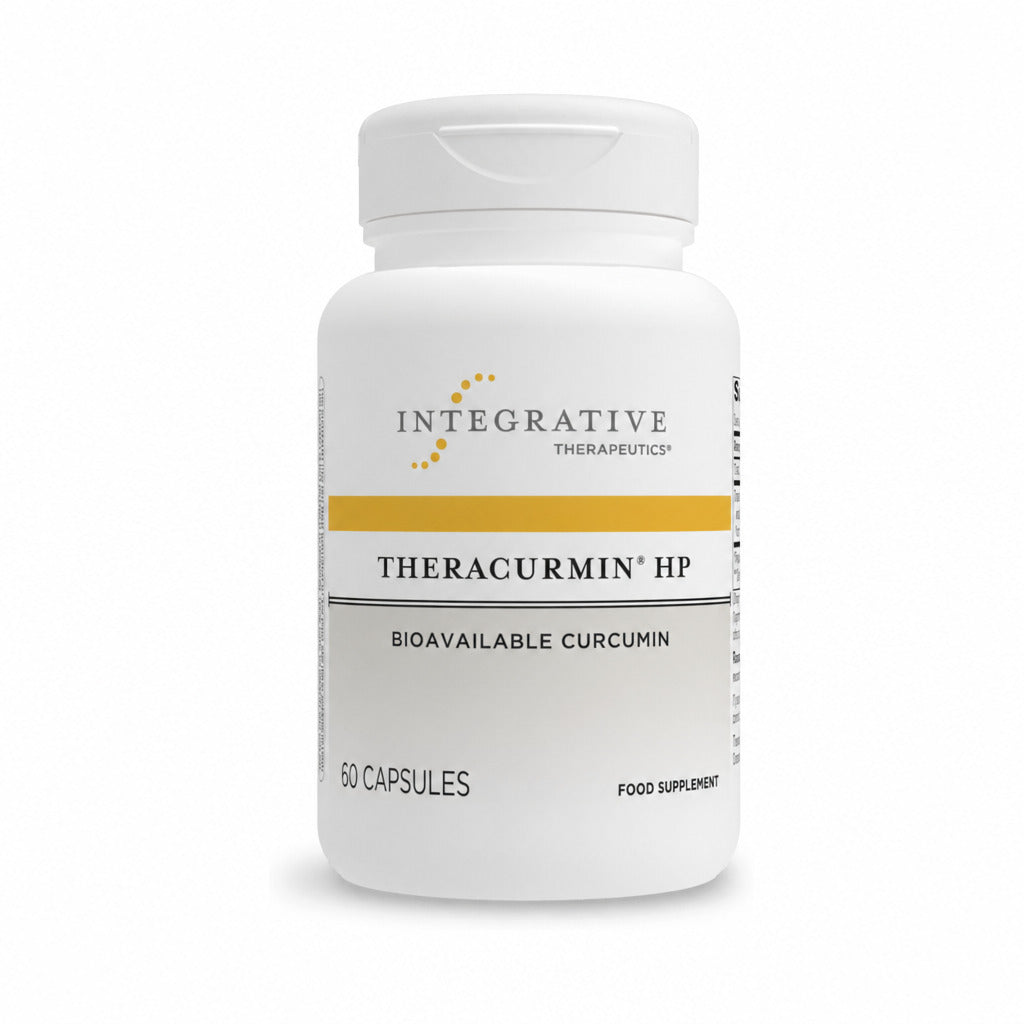 |
Theracurmin HP 60 Capsules - Integrative Therapeutics Theracurmin HP is a dietary supplement that contains a novel preparation of Turmeric; and uses patented, colloidal dispersion technology; to enhance bioavailability and increase curcumin levels in the blood. This supplement can have anti-inflammatory properties, help relieve arthritis, support detoxification, help muscle recovery after exercise, and is more bioavailable to the body than standard curcumin extracts. Suitable for Vegetarians. |
When should you seek medical advice for worsening arthritis?
While targeted nutritional support, gentle exercise, and anti-inflammatory habits form the cornerstone of daily joint management, self-care has its boundaries. Distinguishing between manageable age-related stiffness and symptoms that require professional clinical evaluation is essential for preventing permanent joint damage, maintaining independence, and catching serious underlying conditions early.
Non-Urgent Signs: When to Schedule a GP Appointment
You should book a routine appointment with your GP or functional medicine practitioner if your joint discomfort begins to interfere with your quality of life or fails to respond to self-care:
- Persistent Symptoms: Joint pain, swelling, or morning stiffness that lasts longer than 2 to 3 weeks without improvement.
- Progressive Functional Decline: Finding it increasingly difficult to perform basic daily tasks, such as gripping utensils, opening jars, climbing stairs, or getting out of a chair.
- Disrupted Sleep: Joint pain that regularly wakes you at night or prevents you from falling asleep comfortably.
- Spreading Discomfort: Pain or stiffness that moves into previously unaffected joints (e.g., spreading from one knee to both knees or into the wrists).
- Unclear Diagnosis: Experiencing joint pain for the first time without a clear prior diagnosis, as improper self-treatment can delay necessary care.
What supplements can you take for arthritis?
At Supplement Hub, we stock a curated range of practitioner-backed Arthritis & Joint Support Supplements specifically formulated to target joint discomfort brought on by osteoarthritis, age-related wear, and systemic joint inflammation. By partnering with trusted, clinical-grade brands, such as Designs for Health, Integrative Therapeutics, NBI, and Quicksilver Scientific, our collection delivers highly bioavailable nutrients without unnecessary binders, fillers, or synthetic additives.

